Flower Delivery Hanoi · Flower guides for Hanoi & Vietnam
Get Well Flowers Etiquette in Vietnam: What to Send & Why
Hoa Lang Thang florists · Hanoi
Visiting someone in a Vietnamese hospital with the wrong flower arrangement can unintentionally carry the weight of funeral customs. Over five years arranging get well flowers at Hoa Lang Thang, we've learned exactly which blooms, colors, and combinations Vietnamese patients and their families actually appreciate—and which ones create awkward silences.
This guide draws on direct florist experience: real delivery challenges in Hanoi heat, what patients' families tell us face-to-face, and the specific color rules that matter most.
What colors work for get well flowers in Vietnam?
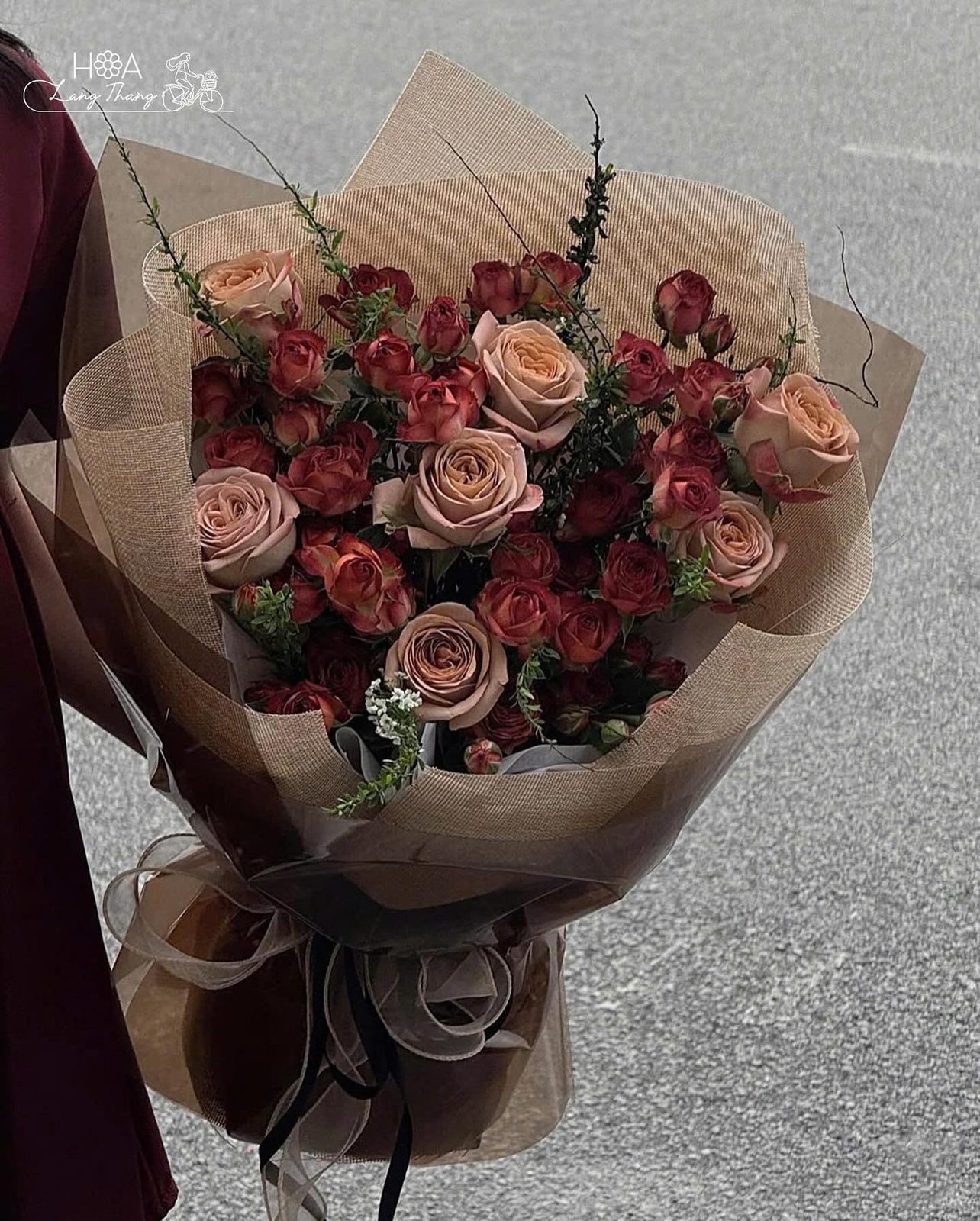
Bright, warm colors signal recovery and optimism in Vietnamese culture. Yellow (longevity, happiness) and red (luck, vitality) are safest; pink conveys gentleness; orange suggests energy. White flowers are taboo—reserved for funerals and mourning. Dark purple also carries mourning weight. Avoid single-color all-white arrangements entirely; if white blooms appear, always combine them visibly with warm tones so the message reads "healing," not "farewell."
At Hoa Lang Thang, we default to mixed warm-tone bouquets (reds, pinks, yellows, corals) for hospital orders unless the sender specifies otherwise. This takes guesswork out for overseas customers unfamiliar with the rules.
Why does the number of flowers matter?
Vietnamese number symbolism is non-negotiable in hospital contexts. Odd numbers are auspicious; even numbers (especially four and six) signal death and bad luck. Send three, five, seven, or nine stems—never four, six, eight, or ten. A single stem reads as loneliness; two stems as separation. This applies to potted plants too: count the visible blooms or fronds.
Most Western florists don't know this rule and will happily arrange a dozen red roses. In a Hanoi hospital, the family notices immediately. We make this explicit in every hospital order confirmation; customers from the US or EU often gasp when they learn what "twelve of anything" means here.
Bouquet types: comparing what works for recovery
| Bouquet Type | Best For | Why It Works | What to Avoid |
|---|---|---|---|
| Mixed warm stems (5–7 stems) | First visit, any patient | Bright, compact, fits bedsides | Large, heavy arrangements that crowd monitors |
| Potted flowering plant (orchid, anthurium) | Longer hospital stay (5+ days) | Lives weeks; patient can take home | Ferns alone; plants needing direct sun in dim rooms |
| Single-variety yellow or coral roses (7 stems) | Formal respect (colleague, mentor) | Clear message; no color confusion | All white or very pale pink (reads funeral) |
| Mixed garden blooms (tulips, spray roses, hypericum) | Younger patient, upbeat tone | Varied colors soften seriousness | Dark or droopy varieties (associate with decline) |
| Sunflower accents with supporting stems | Cheerful, immune-boosting vibe | Psychology: sunflowers = happiness | Sunflowers alone (too bold for elderly patients) |
The safest choice: seven stems of coral, pink, or yellow in a low, side-table-friendly vase, with a simple card. This works across all age groups and family structures in Vietnam.
How to order get well flowers from outside Vietnam
If you're sending from abroad (US, UK, Australia, Japan), overseas delivery creates real logistics—not just aesthetics. Send flowers to Hanoi from abroad platforms often don't understand Vietnamese color taboos. Hoa Lang Thang's photo-before-delivery system solves this: we arrange the bouquet, photograph it, send the image to you for approval, then deliver within 2 hours in inner Hanoi.
Step-by-step process:
- Message us on WhatsApp with patient's name, hospital, room (if known), and your budget.
- Specify colors explicitly: "No white. Coral and yellow preferred. Five or seven stems."
- We arrange using fresh-imported stems (Ecuador roses, Dutch tulips, premium hypericum).
- Photo sent to your phone before delivery—you see exactly what arrives.
- Delivery confirmed with timestamp and photo at hospital entrance or ward.
- Card message in Vietnamese, English, Japanese, or Korean written on request.
This transparency matters because hospital staff sometimes screen flowers; showing them the photo first prevents rejection. Also, Hanoi hospitals have strict no-visit windows (often 11:00–12:00, 17:00–19:00); coordination via photo means you're never guessing if the arrangement was actually left.
💐 Order on WhatsApp +84 969 293 894
Heat and humidity: what actually survives Hanoi hospitals
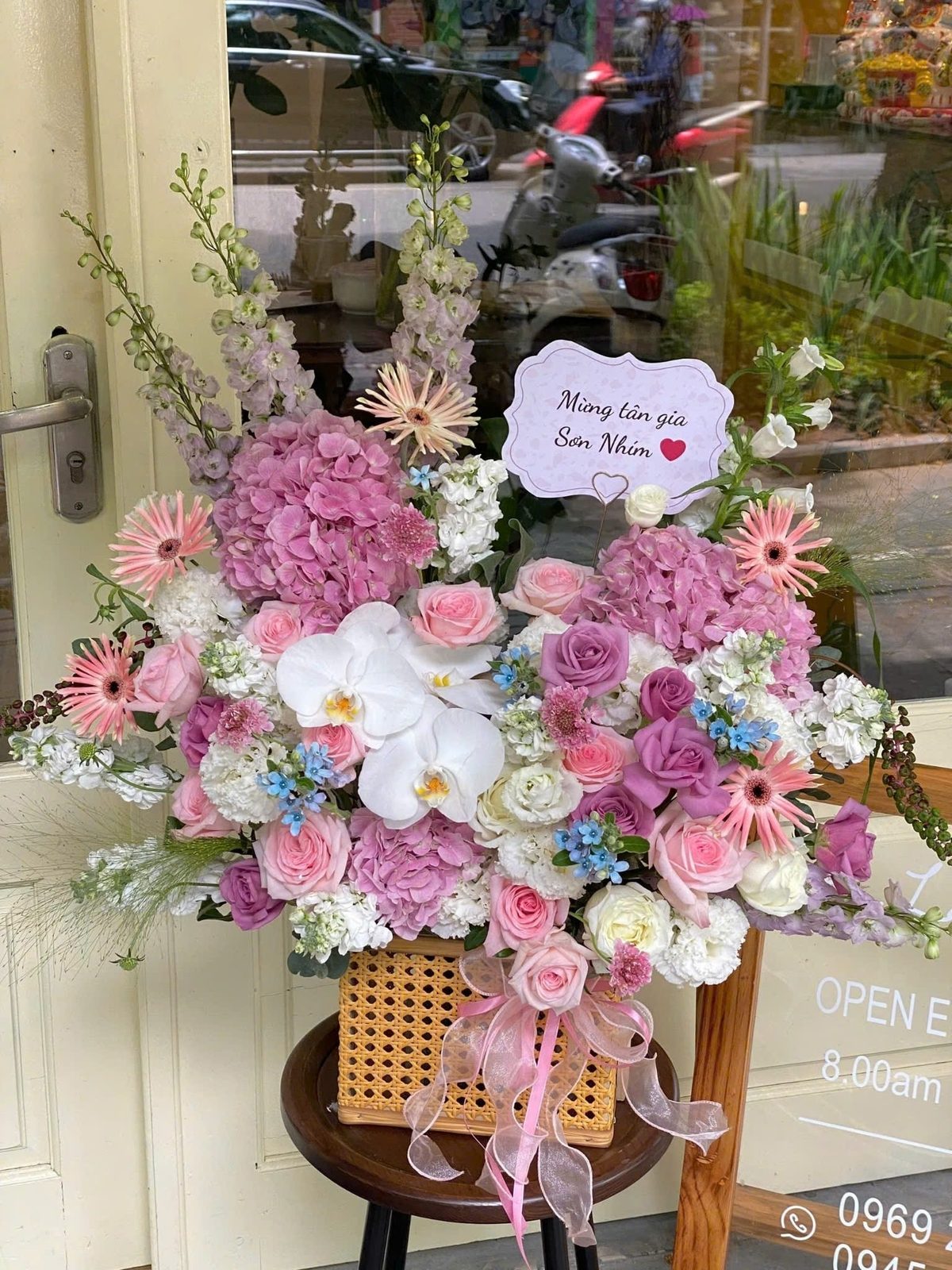
Hanoi summers hit 35–38°C (95–100°F) with 80%+ humidity. Hospital air-conditioning is inconsistent—some wards are freezing, others stuffy and warm. Delicate blooms wilt in 24–36 hours under these conditions. We've learned which imports hold up:
- Ecuador roses (thicker petals, better water uptake): 4–5 days reliably.
- Dutch tulips (tight heads, resilient): 5–6 days even in heat.
- Hypericum berries (near-indestructible): 7+ days.
- Carnations (often overlooked): 6–8 days, bright colors, cheap, patients love them).
- Orchids in pots (literally survive neglect): 2–3 weeks.
Avoid: Garden roses (wilt by day two), ranunculus (too fussy), dahlias (heat-sensitive). Local Vietnamese flowers (like sunflowers or gladiolus) are cheaper but fade faster in hospital climates.
We include care instructions (change water every two days, remove lower leaves, keep out of direct sun) with every hospital delivery. Families actually follow these; patient morale lifts when the bouquet lasts a week instead of three days.
Timing, card messages, and etiquette dos/don'ts
Order before 19:00 for same-day delivery in inner Hanoi (zones 1–4: Hoan Kiem, Ba Dinh, Tay Ho, Dong Da, Hai Ba Trung). Ho Chi Minh City orders delivered same day if placed before 15:00. Photo confirmation arrives 30 minutes before delivery, letting you know the exact time.
Card message etiquette:
| What to Write | Why | What NOT to Write |
|---|---|---|
| "Wishing you strength and a swift recovery." | Direct, warm, culturally neutral | "Get well soon" (too casual for formal patients) |
| "Your family and friends are thinking of you." | Emphasizes community support (key in Vietnamese culture) | References to "death," "heaven," or "God's will" (religion varies; risky) |
| "You are in our prayers." | If sender is known to be religious, this lands well | Anything about the diagnosis or prognosis (impolite) |
| "[Sender name]和你在一起" or "Tôi ở bên cạnh bạn" (I am beside you) | Simple, emotionally honest | Long, flowery prose (feels insincere in hospital context) |
In Vietnamese culture, brevity and sincerity outweigh poetry. A one-line message beats three paragraphs. If you don't speak Vietnamese, English is always acceptable in Hanoi; we can translate on request.
Never: send flowers to a patient without checking hospital visiting hours and flower restrictions first. Some wards (ICU, pediatrics, infection control units) ban fresh flowers entirely due to pollen or contamination risk. Always confirm the patient's room accepts flowers before delivery.
What to check before you order: a real checklist
- [ ] Hospital name and address (some "Hanoi Hospitals" exist in multiple locations; verify).
- [ ] Patient's full name and room number (if possible; helps ward staff route flowers correctly).
- [ ] No white flowers? Confirm sender's comfort with this rule; explain why gently.
- [ ] Stem count chosen? Pick 3, 5, 7, or 9; never 4, 6, 8.
- [ ] Color palette stated clearly? Example: "Coral, pink, yellow. No reds." (Reds signal different intent to some; clarify if uncertain.)
- [ ] Vase type preference? Low vase (bedside table-friendly) vs. tall (if patient is mobile and room is spacious).
- [ ] Visiting hours confirmed? Delivery timing must align; no point sending flowers during restricted access.
- [ ] Photo approval received? Don't pay final balance until you see the actual arrangement.
- [ ] Card message finalized? Vietnamese or English; 1–2 sentences max.
- [ ] Delivery address precise? Building entrance, ward name, bed bay—lack of detail delays delivery.
Most delays and mix-ups in Hanoi hospital deliveries stem from vague addresses or wrong hospital names. Be specific; it costs the same and cuts delivery time by 30 minutes on average.
---
Related guides:
- For birthday flowers, see birthday flowers Hanoi (different etiquette, brighter tones, numbers less strict).
- For sympathy and funeral flowers, read sympathy flowers in Vietnam (white, pale flowers; completely different customs).
- For delivery elsewhere in Vietnam, explore same-day delivery Hanoi and flower delivery Ho Chi Minh City.
See our full flower prices and collections to browse current stems and arrangements. For deeper cultural context, our Vietnamese flower etiquette guide covers all occasions.
FAQ
Can I send get well flowers to a Vietnamese patient if I don't know their exact hospital ward?
Yes, but delivery may take longer. Provide the patient's full name, hospital name, and approximate location (e.g., "Hanoi Medical University Hospital, District 1"). We'll call the main number to locate the ward. Confirm your phone is reachable so the delivery driver can coordinate. Best practice: text or call the patient's family first to ask the ward name.
What if the hospital says no fresh flowers due to infection control?
Request a potted orchid or anthurium instead—these arrive in pots with soil, not water-based vases, and have lower contamination risk. Some ICUs accept potted plants when cut flowers are banned. Alternatively, send a care gift (chocolates, magazines, a blanket) instead. We can advise on what alternatives the specific hospital permits if you contact us first.
Do I need to include a vase when ordering get well flowers in Hanoi?
All our bouquets arrive in a low, stable vase suitable for bedside tables. The patient keeps the vase as part of the gift. No additional purchase needed. If you'd prefer a specific vase style (ceramic, glass, bud vase), mention it at order time; standard vases are included.
Is it rude to send an odd number of flowers other than 7?
No. Three, five, seven, and nine are all auspicious in Vietnamese custom. Seven is most common and safe; three works well for compact bouquets; nine is formal and generous. Avoid four, six, eight—these carry unlucky associations. Odd numbers universally signal positivity, so you're safe within that range.
How long do imported roses last in Hanoi heat compared to local flowers?
Ecuador and Dutch roses last 4–6 days in typical hospital conditions (mixed air-con, warm rooms). Local Vietnamese flowers (cheap gladiolus, sunflowers) wilt in 2–3 days under the same heat and humidity. Hypericum berries and carnations beat roses in longevity (6–8+ days). If the patient will be hospitalized 5+ days, choose long-lasting stems or a potted plant to avoid sad, drooping flowers by day three.
Can I write the card message in English if I don't speak Vietnamese?
Absolutely. English is widely understood in Hanoi and universally acceptable for get well messages. If you'd like the message translated to Vietnamese to feel more personal, we translate for free. Japanese and Korean translations also available on request. Keep the message short (1–2 sentences) regardless of language—sincerity reads across any tongue.
Same-day delivery in Hanoi (order before 19:00). We send a photo of your actual bouquet before it goes out.
Order on WhatsApp +84 969 293 894Frequently asked questions
Can I send get well flowers to a Vietnamese patient if I don't know their exact hospital ward?
Yes, but delivery may take longer. Provide the patient's full name, hospital name, and approximate location (e.g., "Hanoi Medical University Hospital, District 1"). We'll call the main number to locate the ward. Confirm your phone is reachable so the delivery driver can coordinate. Best practice: text or call the patient's family first to ask the ward name.
What if the hospital says no fresh flowers due to infection control?
Request a potted orchid or anthurium instead—these arrive in pots with soil, not water-based vases, and have lower contamination risk. Some ICUs accept potted plants when cut flowers are banned. Alternatively, send a care gift (chocolates, magazines, a blanket) instead. We can advise on what alternatives the specific hospital permits if you contact us first.
Do I need to include a vase when ordering get well flowers in Hanoi?
All our bouquets arrive in a low, stable vase suitable for bedside tables. The patient keeps the vase as part of the gift. No additional purchase needed. If you'd prefer a specific vase style (ceramic, glass, bud vase), mention it at order time; standard vases are included.
Is it rude to send an odd number of flowers other than 7?
No. Three, five, seven, and nine are all auspicious in Vietnamese custom. Seven is most common and safe; three works well for compact bouquets; nine is formal and generous. Avoid four, six, eight—these carry unlucky associations. Odd numbers universally signal positivity, so you're safe within that range.
How long do imported roses last in Hanoi heat compared to local flowers?
Ecuador and Dutch roses last 4–6 days in typical hospital conditions (mixed air-con, warm rooms). Local Vietnamese flowers (cheap gladiolus, sunflowers) wilt in 2–3 days under the same heat and humidity. Hypericum berries and carnations beat roses in longevity (6–8+ days). If the patient will be hospitalized 5+ days, choose long-lasting stems or a potted plant to avoid sad, drooping flowers by day three.
Can I write the card message in English if I don't speak Vietnamese?
Absolutely. English is widely understood in Hanoi and universally acceptable for get well messages. If you'd like the message translated to Vietnamese to feel more personal, we translate for free. Japanese and Korean translations also available on request. Keep the message short (1–2 sentences) regardless of language—sincerity reads across any tongue.