Flower Delivery Hanoi · Flower guides for Hanoi & Vietnam
How to Care for Kumquat Trees in Vietnam Heat
Hoa Lang Thang florists · Hanoi
Kumquat trees in Vietnam need daily misting during hot months (April–September), soil that drains within 2 hours of watering, and afternoon shade when temperatures exceed 35°C. Water deeply 3–4 times weekly in dry season, reduce to twice weekly in cool months. Fertilize monthly March–October with balanced NPK (10-10-10). Spider mites and scale insects attack stressed trees; inspect leaf undersides weekly. Repot every 18 months into 1–2 size larger containers. Hoa Lang Thang customers often pair kumquat care guides with gift plants for colleagues and family—order care-conscious selections to ensure recipient success. 💐 Order on WhatsApp +84 969 293 894 | 🌹 See bouquets & prices ---
What temperature and humidity does a kumquat need to survive Hanoi summers?
Kumquats tolerate 15–30°C optimally but survive 10–40°C. Above 35°C, fruit drop accelerates and leaves scorch unless humidity exceeds 60%. In Hanoi's peak heat (May–August), indoor trees near north-facing windows or under 50% shade cloth thrive; outdoor placement on concrete intensifies leaf damage. Mist foliage at dawn and dusk when air is cool. Place pots on pebble trays filled with water—evaporation raises microclimate humidity by 10–15%. Keep trees 2+ meters from air-conditioning vents. Move potted trees to partially shaded patios during 13:00–16:00 peak heat. This balance prevents heat stress while maintaining photosynthesis for fruit development.

How often should you water kumquat trees in Hanoi's wet and dry seasons?
Dry season (November–April): water 2–3 times weekly, checking soil 5 cm deep—if dry, water deeply until drainage exits. Wet season (May–October): reduce to once or twice weekly; Hanoi's monsoon rain often supplements watering, so check rainfall. Never let roots sit in standing water; poor drainage causes root rot within 10 days. Tap water in Hanoi contains minerals; every other month, flush pots with distilled or collected rainwater to reduce salt buildup. Young trees (first year) need consistent moisture; mature trees (3+ years) tolerate brief dry spells. Afternoon wilting on hot days is normal recovery by evening; morning wilting signals underwatering or root disease. Adjust volume based on pot size: a 10-liter pot needs 2–3 liters per watering in dry season, 1–1.5 liters in wet months. This is the single most common error—overwatering kills more kumquats than underwatering in Vietnam.
What pests and diseases attack kumquats in Vietnam's climate?
Spider mites (khổ qua lá) thrive above 30°C and low humidity, causing fine webbing and yellowing leaves. Scale insects (sâu hạt lựu) hide under leaves and stems, weakening trees over months. Fungal leaf spot appears after weeks of 90%+ humidity without air circulation. Weekly leaf inspection—both sides—catches infestations early. Prune affected branches, spray with neem oil (3% mix) every 7–10 days for two months, or use sulfur dust for mites if neem fails. In wet season, ensure 1-meter spacing between pots and open canopy pruning for airflow. Remove fallen leaves daily; they harbor spores. Anthracnose (bệnh thối quả) blackens fruit in June–July humidity; thin fruit clusters to improve air penetration. A single tree with poor air circulation invites cascading pest problems—prevention (spacing, pruning) costs less than treatment (sprays, lost fruit).
Which kumquat varieties survive Hanoi heat better than others?
Three types dominate Vietnam: Hong Kong kumquats (small, very sour, tolerant of 38°C peaks), Meiwa (larger, sweeter, prefers 25–32°C, needs afternoon shade above 35°C), and Nagami (medium, most ornamental, hardy to temperature swings). Meiwa loses fruit above 36°C for sustained periods; growers in District 4 (Ho Chi Minh City, cooler) report better yields than central Hanoi. Hong Kong varieties photosynthesize even under stress and bounce back after heat waves. If you live in inner Hanoi (Hoàn Kiếm, Tây Hồ, Cầu Giấy) with concrete-heavy surroundings, choose Hong Kong or Nagami; if in villa gardens with tree shade, Meiwa succeeds. Nurseries in Hanoi's suburban districts (Hoài Đức, Thạch Thất) stock Nagami and Meiwa; Hong Kong types are rarer but worth seeking for heat resilience. Start with hardy varieties if you're new to tropical plant care; switching varieties after tree decline is frustrating and wastes time.

What fertilizer schedule prevents nutrient deficiency in Vietnam's rainy climate?
Heavy monsoon (May–October) leaches nitrogen from soil; apply water-soluble balanced NPK (10-10-10) every 3 weeks during wet months instead of monthly. Dry season (November–April): monthly feeding suffices. Avoid high-nitrogen feeds (urea); they promote leaf growth at fruit's expense. In March (pre-flowering), shift to phosphorus-rich formula (10-30-10) to encourage flower set; continue through May fruiting. Magnesium deficiency appears as yellowing between green leaf veins—spray 1% Epsom salt solution fortnightly if this occurs. Iron chlorosis (pale new leaves) signals pH creep above 7.0; flush pots and add sulfur to acidify. Slow-release organic pellets (fish meal, bone meal) buried 5 cm from trunk release nutrients over 3–4 months, reducing leaching loss. Feed only from March to October; dormancy in winter requires no fertilizer. A kumquat with proper feeding blooms (January–March in Hanoi) and fruits (April–June) predictably; skipped feeding delays flowering by years.
---
Comparison: What to buy if you're a kumquat gift-giver in Hanoi
| Gift type | Who it's for | Why it works | Delivery note |
|---|---|---|---|
| Mature potted kumquat + care card | New expat or villa owner; has garden space | Tree arrives bearing fruit; recipient sees immediate success. | Order 48 hours ahead; pot size 15 L; Hoa Lang Thang arranges same-day delivery in Hanoi districts. |
| Kumquat + bouquet combo | Birthday or housewarming | Immediate blooms (cut flowers) + long-term living gift. | Bouquet lasts 7–10 days; tree grows for years. Pair with roses or orchids. |
| Care guide + decorative planter | Office gift or Tet | Tree itself sent separately; planter arrives via logistics. | Planter can be ceramic, terracotta, or concrete. Pair with office flowers for team morale. |
| Dwarf potted kumquat | Apartment dweller; balcony-only space | Fits 8–10 L pot; no garden required. Fruits indoors under 6 hours sunlight. | Check before buying: balcony receives morning sun (6–8 hours minimum). |
---
What to check before you buy a kumquat tree
- Pot drainage holes: Must have ≥3 holes minimum. Single-hole pots cause root rot.
- Leaf color: All leaves bright green. Yellow or spotted leaves = pest/disease present.
- Soil moisture: Insert finger 5 cm. If soggy, avoid—tree was likely overwatered in nursery.
- Branch structure: No bare wood or thick black marks. Marks signal fungal infection.
- Fruit load: Some fruit/flowers is normal. Heavy fruit (>50 pieces) on young tree = stress; tree may drop all fruit first month at home.
- Rootbound check: Lift pot. If roots circle the drainage hole densely, repot immediately (see repotting timeline below).
- Pest inspection: Examine under 3–5 older leaves. Spider mites = fine webbing; scale = bumps. If present, negotiate price reduction or decline.
---
Care calendar: Month-by-month in Hanoi
- January–February: Cool, low watering. Flowers appear late Feb.
- March: Begin monthly feeding (phosphorus-rich). Increase watering slightly.
- April–May: Peak heat & fruit set. Water 4× weekly, mist daily. Thin excessive fruit clusters (leave 1 fruit per 15 cm stem).
- June–July: Monitor for fungal diseases during humidity peaks. Prune after fruit drop if needed.
- August–September: Continue heat precautions. Expect spider mites; inspect weekly.
- October: Monsoon tapers; reduce watering to 2–3× weekly. Stop feeding by month-end.
- November–December: Rest period. Water 2× weekly, no feeding. Move indoors if temps drop below 12°C (rare in Hanoi but possible in far northern suburbs).
---
Why kumquat care fails in Hanoi (and how to fix it)
Mistake 1: Daily watering year-round. Hanoi residents accustomed to vegetable gardening over-water trees. Result: root rot, black stem base, fruit drop. Fix: Check soil moisture before each watering; skip 1–2 days if still moist 5 cm down.
Mistake 2: Full-sun placement in May–August. Afternoon scorch kills leaves and triggers mite outbreak. Fix: Move pots to east-facing balconies (morning sun, afternoon shade) or under 50% shade cloth during peak heat.
Mistake 3: Ignoring pest inspection. One infested tree near others spreads mites to the whole garden in 3 weeks. Fix: Weekly leaf undersurface checks; isolate infested trees; spray isolated tree, not the whole garden.
Mistake 4: Forgetting to repot. Trees older than 18 months in same soil deplete nutrients and compact; roots circle the pot. Fix: Repot every 18–24 months into 1–2 sizes larger container (e.g., 10 L → 12 L) in March.
Mistake 5: Using garden soil or clay pots without drainage. Garden soil compacts; clay absorbs water and heats in sun. Fix: Use potting mix (coir, perlite, compost 60:20:20 ratio) in plastic or terracotta pots with ≥3 drainage holes.
---
💐 Order on WhatsApp +84 969 293 894
Pairing kumquat care with gift plants from Hoa Lang Thang
If you're gifting a kumquat tree to someone in Hanoi, complement it with cut flowers for immediate joy. We deliver same-day in inner Hanoi and Ho Chi Minh City. Choose:
- Roses for anniversary or romantic gifts—complements a living plant with timeless elegance.
- Tulips in cooler months (Nov–Feb)—fewer pests, lower heat stress on delivery.
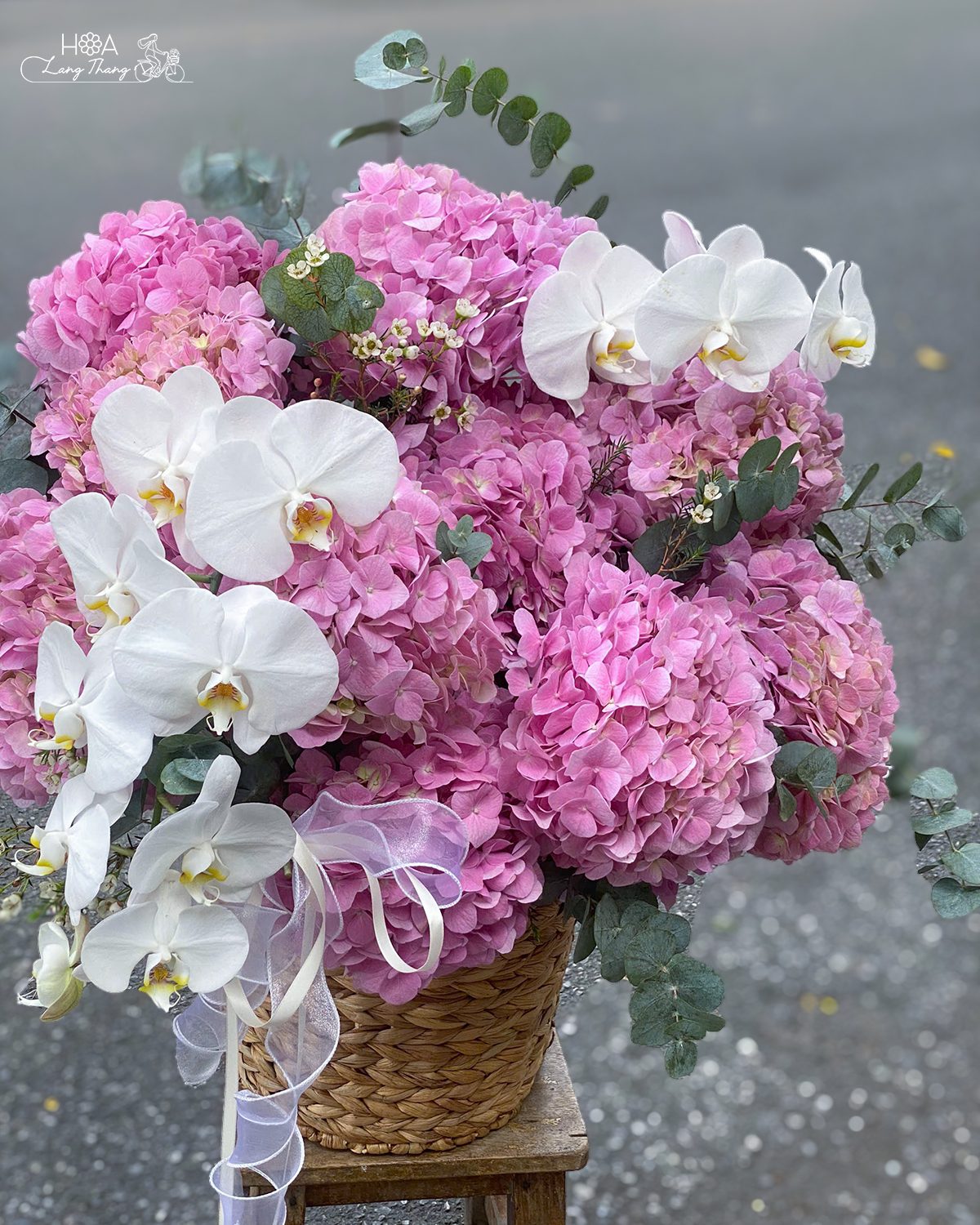
- Orchids from our luxury collection for professional or corporate office flowers—pairs well with a small kumquat for a colleague's desk.
- Grand opening bouquets if gifting to a new cafe or business owner who has garden space—tree and flowers signal growth.
Order via WhatsApp; we send a photo of the finished bouquet before delivery. If the recipient is abroad, we can send flowers to Vietnam from abroad—include a care instruction card in Vietnamese, English, Japanese, or Korean.
---
Beyond watering: The hidden variables
Soil pH: Kumquats prefer 6.0–7.0 pH. Hanoi tap water (often 7.5–8.0) and mineral buildup push pH up over months. Action: Every 4 months, flush pots with distilled water or add 1 teaspoon sulfur per 10 L pot to acidify.
Pot size progression: A 1-year-old tree thrives in 8–10 L pot; 3-year-old in 15 L; mature in 20 L+. Jumping to 20 L from year one waterloggs roots because excess soil stays wet. Action: Repot only 1–2 sizes larger; worst case, wait another 6 months.
Pollination in pots: Indoor/balcony kumquats rarely fruit without pollination. If flowers appear but no fruit sets, hand-pollinate with a soft brush (dabbing anthers to stigils) at midday in spring. Action: Do this 3× weekly during March–May bloom.
Wind exposure: Strong monsoon winds (May–August) dry pots faster and stress young trees. Action: Shield with shade cloth or move to lee side of a wall.
---
Related guides and next steps
Start with our flower care guide for broader tropical plant advice. For Vietnamese flower etiquette when gifting plants, review color and occasion rules. If sending to Hanoi from abroad, learn our process here; we include care cards with every order.
🚚 Same-day delivery in Hanoi | 🌹 See bouquets & prices | 💐 Order on WhatsApp +84 969 293 894
---
FAQ
Can kumquats grow indoors in Hanoi apartments with air conditioning?
Yes, if balcony or room receives 6+ hours of indirect sunlight daily. AC vents dry air; place pots on pebble-water trays to raise humidity. Trees in interior rooms (no natural light) fail within months—artificial grow lights (12 hours daily) help but are impractical for most homes.
How do I know if my kumquat has root rot, and can I save it?
Black, mushy base; persistent wilting even after watering; and foul smell from soil are signs. Remove tree from pot, trim black roots with clean scissors, repot into fresh dry soil, and hold watering for 10 days. If rot reaches stem, survival is unlikely—start fresh with a new tree.
Why does my kumquat drop fruit in April–May even though it has water and sunlight?
Heat stress above 36°C for 5+ consecutive days triggers fruit drop. Also, heavy fruit load (>100 pieces on small tree) exhausts reserves. Fix: thin to 1 fruit per 15 cm of stem in March; increase misting to cool foliage; move to afternoon shade if temps exceed 35°C.
Is it worth spraying neem oil or pesticide for spider mites?
Yes, if infestation is recent (fine webbing on <20% of leaves). Mix 3% neem concentrate, spray every 7 days for 4 weeks. If >50% of leaves are affected or multiple trees are infested, treatment takes 2+ months—isolation and patience required. Chemical pesticides work faster but are toxic; neem is safer indoors and balconies.
Can I grow kumquats from seed from store-bought fruit?
Seeds germinate in 2–3 weeks in moist peat. However, seedlings take 5–7 years to fruit; nursery trees (grafted) fruit in year 2–3. Seedlings also produce smaller fruit and weaker trees. If you want fruit within 2–3 years, buy a mature grafted tree from a Hanoi nursery (Hoài Đức, Thạch Thất districts stock them).
Should I bring my kumquat tree indoors during Hanoi's rare cold snaps (below 12°C)?
Yes. Kumquats are marginally frost-hardy to 8–10°C but suffer leaf drop below 15°C. Move indoors to a bright, unheated room (garage, hallway with windows) if forecasts drop below 12°C, which happens 2–3 nights per December–February in far northern suburbs. Most central Hanoi areas stay above 15°C in winter; rarely necessary.
Same-day delivery in Hanoi (order before 19:00). We send a photo of your actual bouquet before it goes out.
Order on WhatsApp +84 969 293 894Frequently asked questions
Can kumquats grow indoors in Hanoi apartments with air conditioning?
Yes, if balcony or room receives 6+ hours of indirect sunlight daily. AC vents dry air; place pots on pebble-water trays to raise humidity. Trees in interior rooms (no natural light) fail within months—artificial grow lights (12 hours daily) help but are impractical for most homes.
How do I know if my kumquat has root rot, and can I save it?
Black, mushy base; persistent wilting even after watering; and foul smell from soil are signs. Remove tree from pot, trim black roots with clean scissors, repot into fresh dry soil, and hold watering for 10 days. If rot reaches stem, survival is unlikely—start fresh with a new tree.
Why does my kumquat drop fruit in April–May even though it has water and sunlight?
Heat stress above 36°C for 5+ consecutive days triggers fruit drop. Also, heavy fruit load (>100 pieces on small tree) exhausts reserves. Fix: thin to 1 fruit per 15 cm of stem in March; increase misting to cool foliage; move to afternoon shade if temps exceed 35°C.
Is it worth spraying neem oil or pesticide for spider mites?
Yes, if infestation is recent (fine webbing on <20% of leaves). Mix 3% neem concentrate, spray every 7 days for 4 weeks. If >50% of leaves are affected or multiple trees are infested, treatment takes 2+ months—isolation and patience required. Chemical pesticides work faster but are toxic; neem is safer indoors and balconies.
Can I grow kumquats from seed from store-bought fruit?
Seeds germinate in 2–3 weeks in moist peat. However, seedlings take 5–7 years to fruit; nursery trees (grafted) fruit in year 2–3. Seedlings also produce smaller fruit and weaker trees. If you want fruit within 2–3 years, buy a mature grafted tree from a Hanoi nursery (Hoài Đức, Thạch Thất districts stock them).
Should I bring my kumquat tree indoors during Hanoi's rare cold snaps (below 12°C)?
Yes. Kumquats are marginally frost-hardy to 8–10°C but suffer leaf drop below 15°C. Move indoors to a bright, unheated room (garage, hallway with windows) if forecasts drop below 12°C, which happens 2–3 nights per December–February in far northern suburbs. Most central Hanoi areas stay above 15°C in winter; rarely necessary.